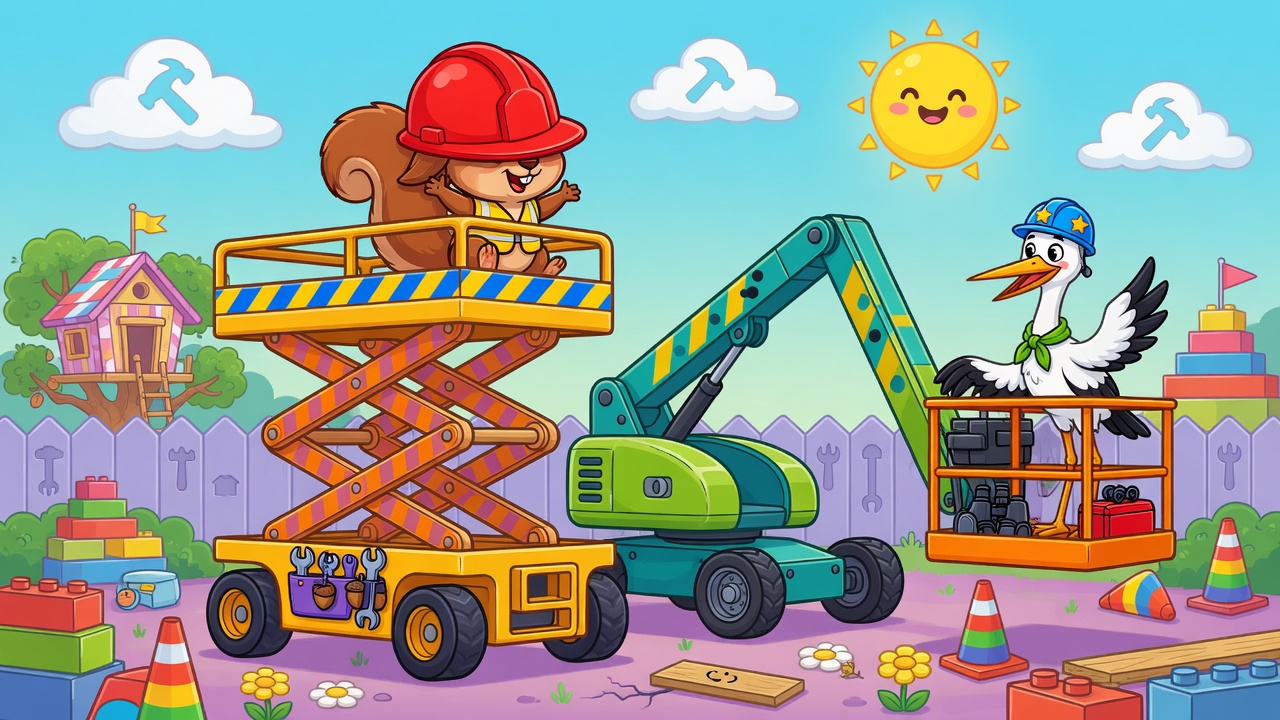
Common access methods (generic overview)
Descriptions only — not product recommendations, hire quotes, or brand comparisons.
Suitability always depends on the task, site, people, and a proper assessment.
Disclaimer
This website provides general information only and does not constitute professional advice, risk assessment,
or a recommendation of any particular equipment or supplier. Working at height is regulated under the Work at
Height Regulations 2005. Always consult the latest official Health and Safety Executive (HSE) guidance, a
competent person, and appropriately qualified suppliers or training providers before undertaking any work.
Ladders and stepladders
Portable ladders and stepladders are common for short-duration, low-risk tasks where three points of contact
can be maintained and the work allows safe use. They are not automatically the right choice for every job.
Factors such as duration, reach, tools carried, ground conditions, and the need for both hands free often
point toward a platform or other access method instead.
Selection includes the right type and duty rating, correct setup (angle, footing, security), and knowing when
to stop and reassess. Our cartoon is a joke — real ladder work is not entertainment.
Mobile access towers
Prefabricated tower scaffolds (often aluminium or similar) provide a temporary working platform that can be
moved when designed and used correctly. They generally suit tasks needing more stability and working space
than a ladder, within the height and load limits of the particular tower configuration.
Safe use depends on manufacturer instructions, correct component assembly, base condition, bracing, platforms,
guardrails, and sometimes stabilisers or outriggers. Incomplete “almost finished” towers are a classic hazard —
assembly and alteration should follow a safe method by people who know the system.
Scaffolding
Scaffolding provides temporary structures for access and working platforms, often for longer-duration or more
complex work on buildings and structures. Systems range from tube-and-fitting to system scaffolds; design,
erection, alteration, and dismantling should be carried out by competent scaffolders under appropriate supervision.
Handover, inspection, load limits, and protection against falls and falling objects are central topics —
again for competent practitioners, not website shortcuts.
MEWPs — scissor lifts and boom lifts
Mobile Elevating Work Platforms (MEWPs) raise people to a working position using powered
equipment. Two broad families people often discuss:
- Scissor lifts — typically vertical rise with a larger platform, useful for work directly above the base footprint.
- Boom lifts (sometimes called cherry pickers in everyday speech) — articulating or telescopic booms that can reach up and often out over obstacles.
Ground conditions, wind, outreach, cage load, proximity to power lines, rescue planning, and operator training
all matter. Machine categories and site constraints vary widely — selection is a professional decision.
No brands on purpose
This page deliberately avoids manufacturer names, model numbers, and hire companies. Nifty Access is independent
and educational. If you need kit or training, use the
Get Help form so we can
help point you toward appropriate professional options.